EUR
 USD
 JPY
 GBP
 CNY
 AED
 SAR
Are Tamper-Resistant Outlets Enough for a Modern Home?

Wall outlets are among the most frequently used features in a home, yet their design often goes unnoticed until something goes wrong.
Tamper-resistant (TR) outlets are one example of how a small design change can help reduce a specific electrical risk. They look similar to standard outlets, but include an internal mechanism intended to prevent certain foreign objects from entering the receptacle.
But how do they work? And are they enough to address the range of electrical risks found in a modern home?
The answer depends on understanding what each safety feature is designed to do—and what it is not designed to do.
What Is a Tamper-Resistant Outlet?
A tamper-resistant outlet is an electrical receptacle equipped with internal safety shutters. These shutters are designed to help prevent foreign objects from being inserted into the contact openings.
In the United States, TR receptacles are commonly used in residential settings, and applicable electrical codes specify where they are required.
Unlike a standard receptacle, a TR outlet has a built-in physical barrier behind its openings. This can help reduce the risk of accidental contact with energized parts, particularly in homes where young children may explore their surroundings.
However, tamper resistance does not mean that an outlet is completely risk-free. TR outlets are designed to address a particular hazard, not every possible electrical problem.

How Do Tamper-Resistant Outlets Work?
The key component is a set of spring-loaded shutters positioned behind the receptacle openings.
Under normal conditions, the shutters remain closed. When a compatible plug is inserted correctly, its prongs apply pressure to the mechanism in a way that allows the shutters to open.
A single object inserted into one opening generally cannot activate both shutters simultaneously, helping prevent access to the energized contacts.
This is a passive safety mechanism: it does not need Wi-Fi, an app, a sensor, or an external power supply to perform its basic function.
The mechanism can help reduce the risk of accidental insertion, but it does not guarantee protection against every object, every misuse scenario, or a damaged or incorrectly installed outlet.
What Risks Can Tamper-Resistant Outlets Reduce?
TR receptacles primarily address the risk of foreign objects being inserted into outlet openings.
They may be especially relevant in homes with young children, where outlets can be within easy reach. They also provide a built-in safety measure without requiring occupants to remember to insert separate outlet covers.
But it is important to distinguish this specific protection from broader electrical safety.
Tamper-resistant shutters do not automatically detect a person approaching an outlet, identify a damaged cord, prevent circuit overload, or protect against every type of electric shock.
A safer home requires multiple measures that address different risks.
What Do Other Electrical Safety Features Do?
Different electrical safety features are designed to address different risks. Understanding their roles can help explain why no single feature replaces the others.
| Safety Feature | Primary Function | What It Does Not Replace |
|---|---|---|
| Tamper-Resistant (TR) Outlets | Use internal shutters to help prevent foreign objects from entering receptacle openings. | GFCI protection, AFCI protection, or circuit breakers |
| GFCI Protection | Helps protect against certain electric shock hazards by detecting ground-fault current and interrupting power. | TR shutters, AFCI protection, or overcurrent protection |
| AFCI Protection | Helps reduce fire risks associated with certain dangerous electrical arcing conditions. | TR shutters, GFCI protection, or general overcurrent protection |
| Circuit Breakers | Interrupt power when overcurrent conditions, such as overloads or short circuits, occur within their operating limits. | TR shutters, GFCI protection, or AFCI protection |
| Radar-Based Proximity Detection | Detects nearby people or objects and can interrupt power under defined conditions, depending on the product's design. | TR shutters, GFCI protection, AFCI protection, or circuit breakers |
These features serve different purposes and should not be treated as interchangeable. The appropriate combination depends on the electrical installation, local code requirements, and the specific risks being addressed.
A proximity-detection feature, for example, may add another layer of protection, but it does not eliminate all electrical hazards or replace code-required safety devices.
How Do Traditional Outlets Compare With More Active Safety Designs?
Most conventional outlets are passive: they provide electrical power when a device is plugged in and remain energized unless power is interrupted elsewhere.
TR outlets add a physical barrier, but their shutters do not actively respond to a person approaching the outlet.
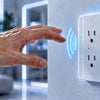
Other designs may add sensing or switching capabilities. For example, a radar-based outlet may detect proximity and interrupt power under defined conditions. This represents a different approach from relying on a physical barrier alone.
These designs should be evaluated by their actual functions, limitations, and test results—not simply by whether they are described as “smart” or “advanced.”
A proximity-based design does not automatically replace TR shutters, GFCI protection, AFCI protection, or circuit breakers. Each addresses a different aspect of electrical safety.
What Should You Consider When Evaluating Outlet Safety?
Instead of asking whether one outlet is completely safe, consider the following questions.
1. What Specific Risk Does the Feature Address?
A physical shutter, a ground-fault interrupter, and a proximity sensor perform different functions. Understand the hazard each feature is designed to address.
2. Does the Outlet Meet Applicable Standards and Code Requirements?
Look for appropriate certifications and confirm that the installation meets local electrical codes. Product descriptions alone are not enough to establish compliance.
3. Is the Outlet Suitable for Its Intended Location?
Check the manufacturer's instructions and the environmental conditions permitted for the product. A device intended for indoor dry locations should not be installed in damp or wet environments.
4. Is the Installation Correct?
Even a well-designed outlet cannot compensate for incorrect wiring or an unsuitable electrical box. Have installation and electrical concerns assessed by a qualified electrician.
5. Are There Warning Signs That Need Attention?
Loose plugs, damaged cords, unusual heat, discoloration, buzzing, crackling, or burning smells should not be ignored. Stop using affected equipment when appropriate and seek professional help.
A Layered Approach to Home Electrical Safety
Tamper-resistant outlets are a useful part of residential electrical safety, but they are not a complete solution on their own.
A practical approach combines appropriate receptacles, required GFCI and AFCI protection, correctly rated circuits, properly maintained cords and devices, and professional installation.
For households looking to add further safeguards, newer designs may offer additional functions. The important question is whether those functions address a real need and have been designed and tested for their stated purpose.
No single feature can eliminate every electrical hazard. Understanding the role and limits of each protection is a more reliable way to make informed decisions about your home.
The Bottom Line
Tamper-resistant outlets help reduce the risk of foreign objects being inserted into receptacle openings. They are an important safety measure, but they do not replace GFCI protection, AFCI protection, circuit breakers, or other appropriate precautions.
For a modern home, the goal is not to find one outlet that solves every problem. It is to understand the different risks, select suitable protections, and make sure the entire electrical system is properly installed and maintained.
Electrical safety requirements vary by location. Consult applicable codes and a qualified electrician for advice specific to your home.
-
Publicado en
smart outlet, Tamper-Resistant, Wall Outlet Design, wall outlet safety