EUR
EUR USD
USD JPY
JPY GBP
GBP CNY
CNY5 Science-Backed Benefits of Eating Slowly
Your stomach knows you're full about 20 minutes before your brain does. Finish lunch in 10, and you've eaten hundreds of calories your body never asked for, before you even felt satisfied. Slow down, and that timing gap closes. The science behind it changes how you'll think about every meal.
1. Better Digestion Starts in Your Mouth
Digestion isn't just something that happens in your stomach. It begins the moment food enters your mouth. Chewing breaks food into smaller pieces and mixes it with saliva, which contains enzymes like amylase that start breaking down carbohydrates before they even reach your stomach. More chewing means less work for your digestive system downstream, which means fewer issues like bloating, gas, and indigestion.
A study published in the American Journal of Clinical Nutrition found that participants who chewed each bite 40 times consumed nearly 12% fewer calories than those who chewed 15 times, and had more stable levels of ghrelin, the hunger hormone, afterward. The physical act of chewing longer directly affects how your body processes what you eat.
2. Your Body Absorbs More Nutrients
When food is thoroughly chewed and moves slowly through your digestive tract, your body has significantly more time and surface area to extract vitamins and minerals. Large, poorly chewed food particles pass through partially undigested, meaning the nutrients in that expensive salad or carefully prepared meal don't get fully absorbed.
Research on protein absorption specifically found that thorough chewing can increase protein absorption by up to 14%. For anyone paying attention to nutrition — whether you're an athlete, managing a health condition, or just trying to get the most out of your food — this is a meaningful difference.
3. Easier Portion Control, Without Willpower
Willpower-based portion control is exhausting. Counting every calorie, measuring every serving, constantly telling yourself to stop eating. It takes mental energy that most people run out of by dinner. Slower eating achieves similar results without the psychological burden.
A 2019 study in Nutrients found that participants who ate a meal over 24 minutes consumed 25% fewer calories from snacks three hours later compared to those who ate the same meal in 6 minutes (Hawton et al., 2019). A separate meta-analysis confirmed that slower eating rates consistently reduce total energy intake across multiple studies (Robinson et al., 2014).
The mechanism is physiological, not psychological. When you eat at a pace that matches your body's natural satiety signaling, you stop because you're actually full, not because you've hit an arbitrary calorie limit.
4. You Actually Enjoy Your Food More
This is the benefit that gets overlooked in clinical discussions but matters the most day to day. Eating slowly lets you notice flavors, textures, and aromas that disappear when you're shoveling food in. Meals become more satisfying on a sensory level, which means you're less likely to crave additional snacks or feel deprived afterward.
There's a neurological component too. The act of chewing at a steady rhythm increases blood flow to the hippocampus, the brain's memory center, and promotes serotonin production. In other words, eating slowly doesn't just taste better; it literally makes you feel better.
The same applies to whatever you're drinking alongside your meal. Temperature shapes flavor more than most people realize: green tea peaks around 120°F, coffee loses most of its aromatic complexity below 130°F. When you're eating slowly, your drink spends half the meal in that flat, lukewarm zone where everything tastes muted. MiaoLab's thermostatic series holds every sip in the sweet spot, so your drink tastes the way it should, from first to last.
5. Reduced Bloating and Post-Meal Discomfort
Fast eating introduces two sources of digestive discomfort at once. First, swallowed air: when you eat quickly, you take in significantly more air with each bite, which leads to bloating, gas, and that heavy, uncomfortable feeling after meals. Second, large food particles that your stomach struggles to process efficiently.
Slowing down reduces both. Less air swallowed per bite. Smaller food particles arriving in your stomach. The result is a noticeably more comfortable post-meal experience. No unbuttoning your pants under the table, no 3 PM energy crash from a rushed lunch.
One Overlooked Reason People Eat Fast
Here's something the standard "just chew more" advice never mentions: eating slowly has a real trade-off. Hot food starts cooling the moment it leaves the stove. Pasta goes from steaming to room temperature in about 15 minutes. Soup loses half its appeal once the surface skin forms. Stir-fries: forget it, five minutes and you're eating cold vegetables. There's a quiet, unconscious pressure to finish before everything on the plate turns tepid. You're not rushing because you want to. You're racing the food itself.
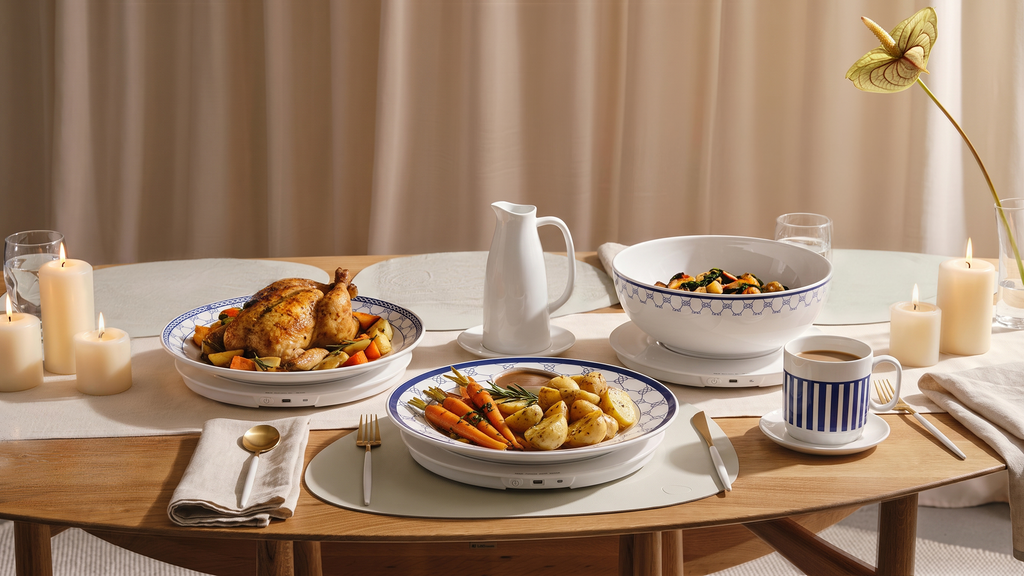
Keep your plate at a steady serving temperature and that pressure disappears. And yes, your coffee and tea stay hot too. When everything on the table holds heat from appetizer to dessert, nothing is pushing you to rush. You eat at your body's pace, not your meal's cooling curve.
Ready to stop racing your food? Explore the MiaoLab Thermostatic Porcelain Tableware Series —— self-warming tableware that keeps your meal hot and your drink at the right temperature from first bite to last, so there's no rush to finish before everything goes cold.
Related Guides
-
Veröffentlicht in
digestion, food science, healthy eating, meal habits, mindful eating, taste perception