EUR
EUR USD
USD JPY
JPY GBP
GBP CNY
CNYWhy Your Lunch Gets Cold So Fast and How to Keep It Warm Longer
Cooking takes time. Losing the heat takes only minutes.
Lunch often comes out of the microwave exactly as it should: hot, comforting, and ready to eat. But a quick meeting, one last email, or a short phone call is sometimes all it takes for that warmth to disappear.
The microwave usually isn't the problem. Heat begins escaping the moment food leaves it, and everyday habits like cold containers, thin plastic, or waiting too long to eat speed up the process.
Keeping lunch warm isn't about reheating it again. It's about holding on to the heat you already have.
Here are six practical ways to help your lunch stay warmer for longer, whether it's leftovers from last night or a meal-prep box packed for the week.
Quick Comparison: Which Method Keeps Lunch Warm the Longest?
| Method | Warm After Reheating | Best For | Cost |
|---|---|---|---|
| Thermostatic tableware series | Unlimited (maintains serving temperature) | Long meetings, desk lunches | $30–$60 |
| Preheated vacuum container | 4–6 hours | Soups, grains, stews | $20–$35 |
| Glass container with lid | Around 30% longer than plastic | Everyday meal prep | $10–$20 |
| Preheating the container | Adds 1–2 hours to any method | Works with every container | Free |
| Foil and towel wrap | 2–3 hours | Burritos, baked foods, sandwiches | Free |
1Start With a Warm Container
While your food is reheating, warm the container too.
Fill the empty container with hot water and let it sit for about a minute while your food heats in a separate bowl. Empty the water, dry the container, and transfer the food immediately.
A room-temperature container absorbs heat the moment food touches it, just as a cold dinner plate cools freshly cooked food. A preheated container starts much closer to the food's temperature, so far less heat is lost during the first few minutes.
This simple habit can add one to two hours of warmth to almost any lunch and costs nothing. For people who regularly bring meal-prepped lunches to work, it is one of the easiest improvements to make.
2Choose Glass Instead of Plastic
Most meal-prep containers are designed for convenience rather than heat retention.
Thin plastic transfers heat quickly and provides very little insulation after leaving the microwave. Borosilicate glass retains heat noticeably longer while also resisting stains and lingering food odors that often build up in plastic containers over time.
Glass also offers another practical advantage. Unlike worn plastic, it does not raise the same concerns when repeatedly reheating oily or acidic foods throughout the week. If lunch is reheated almost every workday, switching to glass is a worthwhile upgrade.
3Heat the Food Properly Before Trying to Keep It Warm
A container can only preserve the heat that is already there.
Food that is only reheated until it is "no longer cold" loses temperature much faster than food heated to a proper serving temperature. Once fully reheated, transfer it immediately into a preheated container and close the lid while the heat is still trapped inside.
According to the USDA Food Safety and Inspection Service, hot food should remain above 140°F (60°C) whenever possible. Starting with thoroughly heated food and sealing it quickly helps preserve both food quality and food safety.
4Let Insulation Do the Work
For mornings when you are heading straight out the door, a vacuum-insulated food container remains one of the most reliable non-electric solutions.
A properly preheated double-wall stainless-steel container can keep reheated food warm for four to six hours.
One detail matters more than the brand itself: fill it as completely as possible. Empty space inside the container allows heat to escape much faster, so a full container consistently outperforms one that is only half full.
5When Lunch Doesn't Happen on Time, Use Active Warming
Not every lunch happens at noon.
Meetings run longer than expected. Emails pile up. A quick task becomes an hour. By the time lunch finally arrives, even the best insulated container has begun to lose heat.
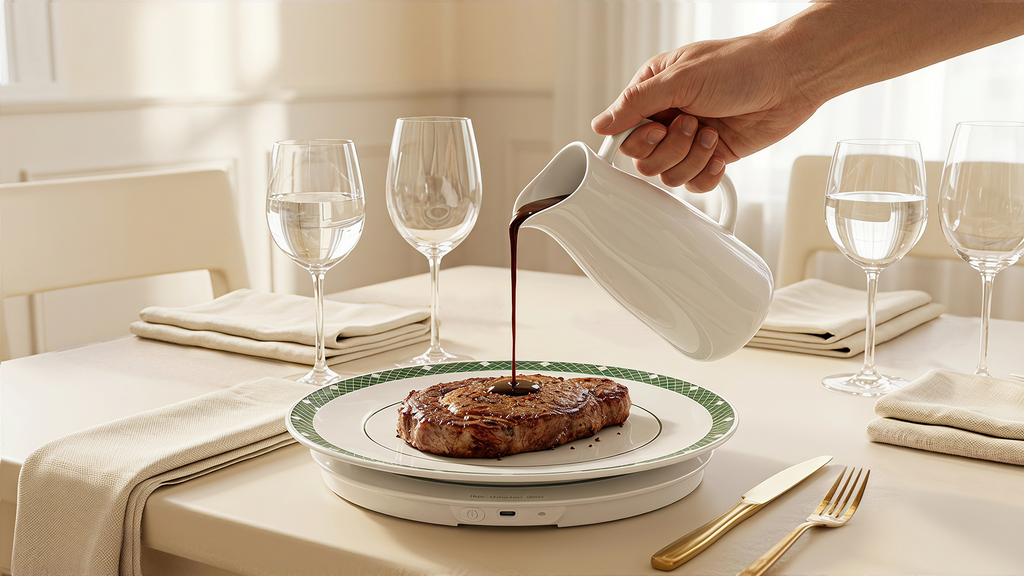
This is where active warming offers an advantage. Instead of simply slowing heat loss, a thermostatic warming vessel continuously maintains food between 110°F and 130°F (43°C–54°C), keeping every bite enjoyable without repeated trips to the microwave.
For people who spend much of the day at a desk, the MiaoLab Thermostatic tableware series approaches the problem differently. Rather than relying solely on insulation, it gently replaces the heat naturally lost over time, allowing food and drinks to stay at a comfortable serving temperature throughout the meal.
6A Simple Solution for Solid Foods
Not every lunch requires specialized equipment.
For burritos, baked potatoes, sandwiches, and other solid foods, wrapping the meal tightly in aluminum foil before covering it with a clean kitchen towel creates an extra layer of insulation that can preserve warmth for two to three hours.
It is inexpensive, portable, and surprisingly effective when lunch is only a couple of hours away.
Final Thoughts
A good lunch is not only about what you eat. It is also about whether it is still enjoyable when you finally have time to sit down.
Keeping lunch warm does not require a completely different routine. Small changes, whether preheating your container, choosing better materials, improving insulation, or using active warming when needed, can make every meal noticeably better.
After all, lunch is one of the few chances to pause during a busy workday. It deserves to stay just as satisfying as when it first came out of the microwave.
If you are looking for thoughtfully designed solutions that reduce the small frictions of everyday living, explore what MiaoLab Living is creating.
-
Veröffentlicht in
food science, food temperature, food warmer, hot food, lunch, thermostatic tableware, warm meals