EUR
EUR USD
USD JPY
JPY GBP
GBP CNY
CNYCoffee Brewing Temp vs Drinking Temp: What Actually Matters for Flavor

Coffee brewed at the right temperature can still taste wrong when it is sipped at the wrong one. The two numbers are not the same, and confusing them ruins more cups than bad beans. Brewing heat exists to pull flavor out of ground coffee. Drinking heat exists so the flavor reaches the tongue without scalding it. They sit in different ranges for a reason.
90°C–96°C · The extraction window
54°C–60°C · The pleasant sipping window
The Brewing Window: 195°F–205°F (90°C–96°C)
Hot water is the tool that extracts the soluble compounds from coffee, and the window that works is narrow. Below about 195°F (90°C), water extracts too little and the cup tastes flat and sour. Above about 205°F (96°C), it pulls out bitter, harsh compounds faster than the good ones. The commonly cited brewing range sits right in between, and most brew methods aim for it. The Specialty Coffee Association's brewing standard sets the target at 195°F–205°F (90°C–96°C) for this reason. This temperature is for the thirty seconds to four minutes of extraction, not for the mug you drink from.
What Hot Water Actually Extracts
Hot water is a solvent, and like any solvent it follows a simple rule: warmer pulls harder. Raise the brew temperature and more of the coffee's soluble material dissolves into the cup, including the caffeine and the chlorogenic acids that drive both the stimulating effect and much of the bitter, astringent edge. Lower the temperature and those compounds stay locked in the grounds, leaving the cup thin and sour. Laboratory extraction work on coffee has shown that temperature is the single most decisive variable for which compounds end up in the cup, more than brew time or the ratio of grounds to water (Lopes et al., 2020). That is the chemistry behind the narrow 195°F–205°F (90°C–96°C) window: too cool and you under-extract, too hot and you over-extract the harsh stuff.
Why the Same Coffee Tastes Different at Different Temperatures
The reason a hot cup and a cooled cup of the same brew read so differently is not the beans, it is perception. Temperature changes how aroma and the sweet, bitter, and sour notes reach you, and we cover the full biology of that effect in our guide on why warm food tastes better. The same brewing-versus-drinking split shows up in tea, and our tea brewing temperature guide walks through it for each tea type. For coffee specifically, the useful numbers come from sensory testing rather than theory, which is where the two temperature windows below come from.
The Drinking Window: Around 130°F–140°F (54°C–60°C)
The temperature that tastes best is far lower than the temperature that brews. Coffee served above roughly 160°F (71°C) scalds the tongue, numbs subtle flavor, and can irritate the mouth over time. The pleasant sipping range sits closer to 130°F–140°F (54°C–60°C), where aroma and sweetness read clearly without the burn. Controlled sensory work on coffee served across 31°C–62°C found that cups at 50°C and above scored higher for roasted and bitter intensity, while cups at 31°C–44°C were where sour, sweet, and tobacco notes stood out (Steen et al., 2017). The same study tracked aroma release and found that volatile compounds leave the cup more readily as it warms, which is the physical reason a hot cup smells richer than a cold one. A cup that is still near brewing temperature when it reaches the lips is too hot to judge, and most people wait without realizing they are waiting for it to fall into range.
Temperature and What You Taste
| Temperature | What happens to the cup |
|---|---|
| 195°F–205°F (90°C–96°C) | Brewing range: hot water extracts the soluble compounds from the grounds |
| Around 130°F–140°F (54°C–60°C) | Drinking window: aroma and sweetness read clearly without scalding |
| Above ~160°F (71°C) | Too hot to sip: you feel the burn more than the coffee |
Why Fresh Coffee Cools Too Fast
A wide, shallow mug sheds heat through its surface, and the first few minutes after brewing are when the cup loses the most. By the time it reaches a good drinking temperature, it is already on its way colder, and a long meeting or a slow morning means it often passes through the pleasant window and keeps dropping. The gap between brew temp and drink temp is small in theory and large in practice, because the cup does not hold the middle. For practical ways to keep a cup warm through a long morning without babysitting it, see our coffee hacks guide.
Hold the Cup at the Right Temperature
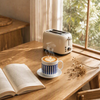
The fix is to keep the coffee in the drinking range instead of letting it fall through it. A porcelain vessel that holds a single portion at a steady 110°F–130°F (43°C–54°C) keeps the cup at a comfortable sip for hours after brewing, so the flavor that the hot water worked to extract stays enjoyable rather than rushed or cold. MiaoLab Thermostatic Mug holds coffee in that steady band, turning a brew that cools into a brew that waits. Brew hot, then let the mug do the holding.
Brew in the 195°F–205°F (90°C–96°C) window, then keep the cup drinkable. MiaoLab Thermostatic Mug holds coffee at a steady 110°F–130°F (43°C–54°C), so the flavor the hot water extracted stays in reach for hours.