EUR
EUR USD
USD JPY
JPY GBP
GBP CNY
CNYWhy Your Power Strip Might Be a Fire Hazard: And How to Check

A power strip rarely fails without warning. The signs are small, visible, and easy to miss until the day they are not. Most strip-related fires start with heat and wear that were present for weeks, and a five-minute check catches nearly all of them before they become a problem.
Feel for Heat During Normal Use
A strip that is warm to the touch after an hour of use is doing its job within reason. A strip that is hot, or a single outlet that is hotter than the others, is asking for attention. Heat is the first language of electrical trouble. If the plastic feels uncomfortable to hold, unplug it and stop using it. Warmth spreads to nearby papers and cords, and that is how a desk fire starts.
Look for Cracks, Scorch Marks, or a Loose Socket
Physical damage is the clearest red flag. A cracked shell, a brown or black mark near an outlet, or a socket that no longer grips a plug tightly all mean the internal connections are compromised. A loose socket arcs, and arcing makes heat and sparks. Any of these means the strip should be replaced, not repaired with tape.
Check the Load Against the Rating
Every strip carries an amp rating, usually printed on the back. Most desktop loads are small, but a space heater, a kettle, or a high-wattage charger can push a strip past its limit on its own. Add up what is plugged in, and if the total approaches the rating, move the heavy item to a wall outlet. Overload is silent until it is not.
Avoid Daisy-Chaining
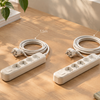
Plugging one strip into another, or a strip into an extension cord into a strip, is the single most common cause of strip fires. Each connection adds resistance and heat, and the final strip carries the load of everything behind it with none of the rating to match. One strip, plugged directly into the wall, is the safe shape. Chains look convenient and fail quietly.
Upgrade to a Safer Build
Older strips with no rating, no cord strain relief, and a light plastic shell are worth retiring. A modern vertical tower keeps cables collected and off the floor, which removes the trip-and-yank that loosens sockets.
MiaoLab Tower Power Strip uses a shell rated to 850°C flame-retardant and a weighted base that keeps it upright, so it does not tip and pull its own cords. The 4 AC outlets and 2 USB-C ports at 30W cover a full desk without daisy-chaining a second strip.
Five minutes once a season prevents most strip fires. MiaoLab Tower Power Strip pairs a flame-retardant shell with a stable weighted base, so the desk stays powered without the risks of a worn, overloaded strip.