EUR
 USD
 JPY
 GBP
 CNY
 AED
 SAR
What Actually Makes an Outlet “Smart”?

Sensor TechnologyA device does not become smart simply because it connects to the internet. In a home, useful smart functionality is about what a device can sense, decide, and do—and how easily those capabilities fit into everyday life.
For some products, the most useful feature is remote control from a phone. Others follow schedules, respond to sensors, or make decisions locally without asking the user to intervene. These are different capabilities, and the word “smart” can describe more than one of them.
What makes a device smart?
A smart device may offer one or more of the following:
- Remote control: a user can operate it from another location, often through an app.
- Automation: it follows a schedule, condition, or routine without a manual action each time.
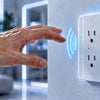
- Sensing: it responds to information from its surroundings, such as motion, proximity, light, or temperature.
- Local decision-making: the device processes information and responds on its own, rather than relying on a remote service for every action.
These functions can overlap, but they are not interchangeable. A connected device is not automatically highly automated, and a device that makes local decisions does not necessarily need an internet connection.
Does a smart outlet need Wi-Fi?
Not always. Wi-Fi is useful when a product needs remote access, internet-based services, or integration with other connected devices. But it is only one way for a device to communicate or operate.
Some functions can be handled inside the product itself. If a device uses built-in sensors and local logic to respond to a defined condition, it may be able to perform that task without connecting to a home network. The right question is not simply whether a product has Wi-Fi, but which functions depend on it.
This distinction matters because connectivity can introduce extra setup steps and dependencies. A network-based feature may rely on a router, an app account, a cloud service, or a compatible platform. A local function may continue to operate without those services, although the exact behavior depends on the product design.
Does every smart outlet need an app?
An app can make setup, scheduling, monitoring, and remote control easier. It can also add another interface that users have to learn and maintain. Whether that trade-off is worthwhile depends on the job the outlet is designed to do.
If the main purpose is remote switching or managing a schedule, app control may be central to the experience. If the purpose is to respond automatically to a local condition, a phone may not need to be involved in everyday operation.
Before choosing a smart outlet, consider:
- Do you need to control it when you are away from home?
- Do you want schedules or routines?
- Does it need to integrate with an existing smart-home platform?
- Which functions continue to work if Wi-Fi or internet access is unavailable?
- Is the app essential to daily use, or mainly for setup and optional controls?
Product descriptions should make these distinctions clear. “Works with an app,” “works over Wi-Fi,” and “responds automatically” describe different things.
Smart technology that stays in the background
For many everyday products, the best technology is not necessarily the technology that asks for the most attention. A well-designed device can make a useful decision in the background, with little need for a screen, a notification, or repeated manual input.
That does not mean connected features are unnecessary. It means the interface should serve the function. A product should not need an app simply to appear modern, and it should not be called smart only because it can be connected.
What to check before buying
Look beyond the label and ask what the product actually does. Identify the sensing or control function, understand whether it depends on Wi-Fi or cloud services, and check which features require an app. For electrical products, also review the rated load, installation requirements, certifications, and the manufacturer's safety instructions.
The most useful smart product is not necessarily the one with the most features. It is the one whose capabilities match the task—and whose limits are easy to understand.
In short: smart functionality is about sensing, decision-making, automation, and useful control. Wi-Fi and apps can support those functions, but they are design choices, not universal requirements.
-
Veröffentlicht in
Home Electrical Safety, Local Automation, No App, No Wi-F, No Wi-Fi, RadarGuard, Sensor Technology, Smart Home, smart outlet, wall outlet safety