EUR
EUR USD
USD JPY
JPY GBP
GBP CNY
CNYClean Desk vs Cluttered Desk: Which One Is Stealing Your Focus?
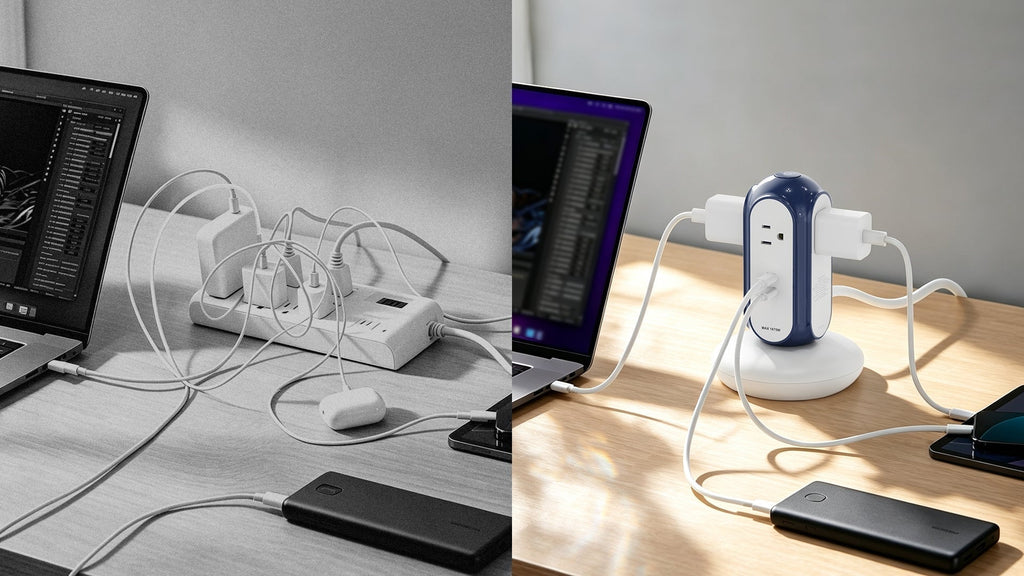
A single stack of loose papers at the corner of the desk pulls the eyes away from the screen every time they lift. Multiply that by a phone, a mug, a cable nest, and a tray of unsorted mail, and the workspace is no longer a place to think. It is a place the brain has to fight through first.
People treat a messy desk as a personality quirk, something tidy friends tease about and creative types wear as a badge. The research suggests it is less harmless than that. Clutter competes for the same attention the work needs, and it charges a tax every time focus breaks and has to rebuild.
Clutter Is a Neural Tax, Not Just a Look
Visual clutter is not passive. In brain imaging work, every object in view activates a representation in the visual cortex, and when many compete for attention the prefrontal cortex has to suppress the extras. That suppression is metabolically costly, and the cost comes out of the budget for the task you actually care about (McMains & Kastner, 2011).
The stress shows up in the body too. In a study of 60 dual-income families, people who described their homes as cluttered showed a flatter cortisol decline through the day, a pattern associated with chronic stress (Saxbe & Repetti, 2010). A messy desk is a small version of the same signal, repeated five days a week.
The Two Desks, Side by Side
A clean desk returns attention to the work faster after every interruption, because there is less to suppress. A cluttered desk keeps a low-grade distraction running all day, which shows up as more small errors and a heavier fatigue by mid-afternoon. The table below puts the contrast in plain terms.
| Dimension | Clean desk | Cluttered desk |
|---|---|---|
| Attention after interruption | Recovers in seconds | Drains to the clutter first |
| Stress signal | Neutral | Flatter cortisol recovery |
| Small errors by mid-afternoon | Fewer | More |
| Time hunting for items | Minimal | Minutes per day, lost |
| Creative novelty | Slightly lower | Slightly higher |
Why the Brain Counts Objects
The McMains and Kastner imaging work matters because it shows clutter is not a feeling, it is a load. Every extra item on the desk is one more representation the visual system builds and the control system has to mute. Mute ten of them and the control system is doing real work that has nothing to do with your task. Clear the desk and that work returns to the task.
The Creativity Caveat
One nuance is worth stating before anyone throws out every pile. In controlled experiments, a disorderly room actually nudged people toward more novel, creative choices, while an orderly room favored conventional, careful ones (Vohs, Redden & Rahinel, 2013). So clutter is not a moral failing and it is not always bad. For a brainstorm or an open-ended ideation session, a little disorder may even help.
For focused execution work, order wins, and most desks are built for execution. The practical answer is not a sterile lab bench. It is a clear main surface for deep work, with a separate tray or corner that holds the creative mess until the task calls for it.
The Ten-Minute Self-Test
Pick one focused task you do daily. Time how long a clean, clear surface takes versus the same task on the usual cluttered desk. Most people report the cleared version feels shorter and ends cleaner. The difference is the bandwidth you bought back, and it compounds across every task in the day.
The Five-Minute Reset
- Clear the eye-level zone first. Anything you see looking straight ahead goes.
- Corral the cables. One vertical hub removes the nest, and we cover the safe way to do it separately.
- Move dishes out of the room. A mug in view is an open loop the brain keeps holding.
- One tray for the creative pile. Keep the mess, just off the main surface.
Digital Clutter Counts Too
The desk is not only physical. A screen with forty open tabs and a notification stack produces the same suppression the papers do, just behind the glass. Closing the tabs you are not using is the same ten-minute reset applied to attention instead of paper. The desk and the desktop reward the same habit.
Reading the Room
A cluttered desk also signals something to other people. In shared or client-facing spaces, the state of the surface reads as a state of the mind, and coworkers or visitors draw conclusions before a word is spoken. The clean desk is not vanity. It is a quiet message that the work here is under control, and that message costs nothing to send.
The flip side is worth naming too. Some of the most focused people run a deliberate mess, and forcing them tidy can break a system that works. The goal is not a uniform look across the office. It is giving each person a main surface clear enough to do deep work, with the mess parked where it helps instead of where it hijacks attention.
Why this is not the cable lecture
We have already covered why your desk matters and the ten-minute cable fix. This piece is about the contrast in attention and stress, not the wiring. Clear the surface, and the desk does more of the focusing for you.
Frequently Asked Questions
Does a messy desk really affect focus?
Visual clutter can compete for attention and make it harder for the brain to filter out irrelevant information. A clearer workspace may reduce the amount of visual information competing with the task in front of you.
Can clutter increase stress?
Research has linked cluttered home environments with stress-related patterns, including changes in cortisol levels. A cluttered desk may create a smaller but repeated version of the same visual and mental load during the workday.
Is a clean desk always better for productivity?
Not necessarily. Order tends to support focused, execution-based work, while some research suggests a more disorderly environment may encourage creative or unconventional thinking. The best setup depends on the task.
How can I declutter my desk quickly?
Start with the eye-level area, remove dishes and unused objects, organize visible cables, and move loose papers into one tray. A five-minute reset is often enough to make the main work surface feel noticeably clearer.
Does digital clutter affect focus too?
Yes. Open tabs, notifications, and unused windows can create the same kind of attention competition as physical clutter. Closing what you are not actively using can help reduce unnecessary visual and mental load.
How often should I reset my desk?
A short reset at the end of each workday or once every few days can prevent clutter from slowly rebuilding. The goal is not to keep the desk perfectly empty, but to keep the main work area clear enough for focused tasks.
Can cable clutter make a desk feel more distracting?
Yes. Visible cable bundles add visual complexity to the workspace and can make an otherwise organized desk feel cluttered. Routing cables behind the desk or grouping power connections into one area can help simplify the surface.
-
Posted in
cable management, clean desk, desk organization, desk setup, focus, Home Office, productivity