EUR
EUR USD
USD JPY
JPY GBP
GBP CNY
CNYVampire Energy: The Phantom Load Hiding in Your Power Strip

The television in the living room is off, the game console is dark, and the microwave clock is the only light in the kitchen. None of them are actually asleep. Each one is drawing power from the wall, around the clock, whether anyone is using it or not. This quiet drain has a name: vampire energy, also called phantom load or standby power.
What Vampire Energy Really Is
Vampire energy is the electricity a device consumes while it looks turned off. The TV is listening for its remote. The cable box is downloading guide data and keeping a hard drive spinning. The microwave is running a clock. The coffee maker is keeping a display lit. None of it delivers useful work, yet the meter keeps running.
The scale is not small. The Lawrence Berkeley National Laboratory, which has measured standby power in thousands of products since the 1990s, puts idle loads at 5 to 10 percent of residential electricity use. The U.S. Department of Energy and ENERGY STAR estimate the average household loses about $100 a year to standby power, and broader analyses put the range closer to $100 to $200 once you count every always-plugged device (Lawrence Berkeley National Laboratory). The Natural Resources Defense Council frames it even larger: roughly $165 per household, or about $19 billion nationally.
The reason it adds up is volume. The average American home has around 65 devices permanently plugged in, and collectively they never stop drawing (Lawrence Berkeley National Laboratory). A single watt seems trivial until it runs for 8,760 hours a year.
The Biggest Offenders
Here is where the money actually goes. The table uses real-world field measurements from the Department of Energy and Lawrence Berkeley National Laboratory, not manufacturer specs, which tend to run low.
| Device (standby) | Typical draw | Annual cost |
|---|---|---|
| Cable or satellite box | 15 to 30 W | $18 to $27 |
| Game console, instant-on | 10 to 25 W | $12 to $18 |
| Desktop PC, sleep mode | 5 to 21 W | $4 to $13 |
| Wi-Fi router and modem | 6 to 10 W | $7 to $12 |
| Microwave clock | 2 to 7 W | $2 to $5 |
| Coffee maker, digital | 1 to 4 W | $1 to $3 |
| Phone charger, idle in wall | 0.1 to 0.5 W | under $1 |
Notice what is at the bottom of that list. The phone charger everyone unplugs with a sense of duty is barely a rounding error: a modern USB-C charger draws a fraction of a watt when nothing is attached, less than a dollar a year. The real vampires are the entertainment center and the always-on boxes, not the charger on the counter.
Why Your Power Strip Is the Easy Kill Switch
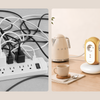
A switched power strip turns a dozen small drains into one switch. Flip it off and the TV, the box, the console, and the speaker all go dark at once. That single habit ends the standby draw for everything plugged into it, with none of the unplug-replug chore.
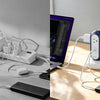
This is the same desk setup we wrote about in Why Your Power Strip Might Be a Fire Hazard, where the lesson was safety. The phantom-load lesson is the same device, viewed from the energy side: a strip you can actually switch off is worth more than a strip you have to unplug by hand. MiaoLab Tower Power Strip gives a crowded desk one clean vertical hub and one switch for every device, which makes the "off at the end of the day" habit almost automatic.
Three Fixes, Ranked by Effort
- Flip the strip. The fastest win is the entertainment center. One switched strip, one flip when you are done for the night, ends 25 to 45 W of constant draw there alone.
- Use a smart strip for the TV setup. A $25 to $35 smart power strip senses when the TV turns off and cuts the peripherals automatically. For a typical entertainment center the payback is 6 to 12 months, after which it is pure savings.
- Unplug the low-use outliers. The spare microwave, the guest-room printer, the rarely used charger: these are easy to unplug without inconvenience and never miss a beat.
The one-minute test
Walk to your entertainment center tonight. Count the small lights that are glowing on devices nobody is using. Each glowing dot is a few watts, running every hour you are asleep. Multiply by a year and you will see why the cable box, not the charger, is the vampire worth hunting.
Cut the phantom load at the source. MiaoLab Tower Power Strip puts four AC outlets and two USB-C ports (30 W) in one vertical, flame-retardant hub with a single switch for everything on your desk.